Why “Wait and See” is the Most Expensive Strategy in Alabama Land Development

“Let’s just wait and see.” Famous last words, right before a flood zone reclassification, a denied variance, or a neighbor contesting your permit. In Alabama, inaction is an action and often the costliest one. Those five little words have cost Alabama landowners hundreds of thousands, sometimes millions of dollars. Not through bad luck or bad [...]

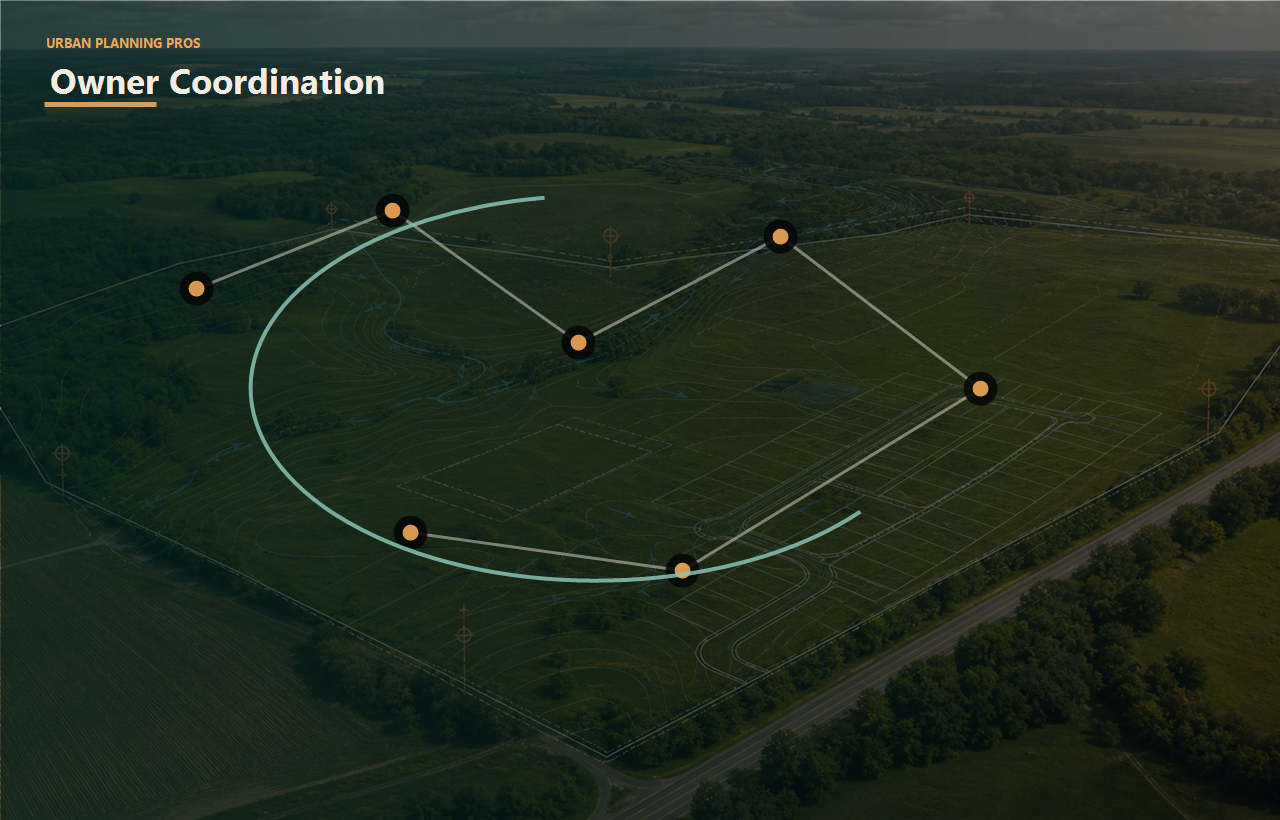
Why “Wait and See” is the Most Expensive Strategy in Alabama Land Development header image for Urban Planning Pros showing Engineering coordination image with contour and drainage overlays
Engineering inputs Drainage, grading, utilities, access, and civil scope tied to the land decision.

“Let’s just wait and see.” Famous last words, right before a flood zone reclassification, a denied variance, or a neighbor contesting your permit. In Alabama, inaction is an action and often the costliest one. Those five little words have cost Alabama landowners hundreds of thousands, sometimes millions of dollars. Not through bad luck or bad land, but through bad timing. Or worse… no timing at all.

Because in Alabama land development, inaction is an action, one with compounding interest, often paid in red tape, rework, and regrets.

Whether you’re holding acreage outside Huntsville, eyeing parcels in Baldwin County, or trying to do something creative in Jefferson, hesitation isn’t a strategy—it’s a liability.

The Real Cost of Waiting in Alabama

Think you’re saving money by putting off a call with a land planner or engineer? Think again.

Let’s take a real-world example:
One landowner in Shelby County recently held off on hiring a consultant for what they believed would be a “simple” subdivision. A year later, a new stormwater ordinance was passed—requiring extensive erosion control measures, pushing their estimated development cost up by $68,000.

That’s $68K they hadn’t budgeted, all because they wanted to “wait and see.”

Municipal codes, flood zone maps, soil quality ratings, and zoning overlays can all shift while you’re on pause—and none of them change in your favor. Just look at the pace of growth around Huntsville and Baldwin County. With that growth comes change. Fast.

So if you’re not actively planning? You’re actively falling behind.

The “Free Advice” That’s Costing You Big

Here’s a tough truth: most landowners start off trusting the wrong people.

None of these folks are thinking about your long-term plan—or your future bank account. They aren’t watching zoning updates, tracking infrastructure changes, or keeping an eye on legal shifts in watershed policies.

And they sure as hell aren’t liable when you get hit with a variance denial or a code violation.

Why Vertically Integrated Planning Is a Secret Weapon

Here’s where you flip the script. At UrbanPlanningPros, we’re what’s called a Vertically Integrated Land Development Consultancy. That’s not just buzzwords—it means we’re your single point of contact for everything from concept to completion.

Instead of paying separate firms for land use studies, engineering drawings, zoning research, and infrastructure design, our clients get a full-circle team that communicates with each other—not just at you.

We’re not some design firm in a vacuum. We’re consultants who:

✅ Understand the nuances of each Alabama municipality
✅ Stay current on emerging state-level legislation
✅ Help you see around corners before they cost you

In other words: we don’t wait. We work ahead.

How Planning Now Saves You 5–6 Figures Later

Let’s break it down.

With proactive land consulting, these become solved problems, not “surprises we wish we caught sooner.”

This Isn’t Just Alabama’s Problem—It’s Yours (Until You Act)

Too many landowners see development as something to “get to eventually.” But Alabama isn’t waiting. Roads are going in. School districts are redrawing. Economic development zones are forming. And if you’re not planning now, you’ll be planning in damage control mode later.

At UrbanPlanningPros, we help landowners like you turn uncertainty into opportunity—without bloated engineering fees, bureaucratic nightmares, or missed deadlines.

We’re not here to sell you a dream.

We’re here to help you build one that’s actually allowed.

Let’s Talk Before the Clock Runs Out

If you’re sitting on land in Alabama and think “I’ll deal with it later,” we need to talk now. Because “later” could be too late.

👉 Schedule a free land clarity consult today
👉 Or learn how our vertically integrated team can serve your land

Because no one ever looks back and says:

“I wish I waited longer to get started.”

But they do say:

“I wish I had called sooner.”

Expanded planning guide for Why “Wait and See” is the Most Expensive Strategy in Alabama Land Development

Zoning content should help the reader understand that a zoning label is only the starting point. The real question is how the classification, overlays, comprehensive plan, use standards, dimensional rules, parking, access, hearings, and staff interpretation affect the intended project.

Why this issue matters before design momentum builds

A concept plan can look clean while still conflicting with use tables, setbacks, density limits, buffering requirements, special exceptions, future land-use policy, or local political expectations. Reading zoning early keeps the owner from designing a version of the project that cannot survive review.

For landowners, developers, builders, and investors, the important question is not whether the idea sounds attractive. The practical question is whether the idea can survive the zoning path, the physical site, the required technical studies, the available budget, the review calendar, and the owner's exit strategy. When those pieces are not discussed together, the project can look strong in conversation while quietly accumulating risk.

Common bottlenecks behind this zoning question

The bottlenecks usually include relying on a parcel listing instead of the ordinance, missing overlays, misunderstanding conditional-use procedures, skipping comprehensive-plan context, and assuming that neighboring uses prove the proposed use will be allowed.

Most stalled land decisions are not stalled because one person failed to work hard enough. They stall because the wrong question was answered first, the next technical scope was not tied to a decision, or the owner received fragments of information without a clear interpretation. A survey note, zoning email, utility comment, drainage observation, or staff concern only becomes useful when someone translates what it changes for the project path.

How each stakeholder should read the risk

Landowners should look at this topic through value, timing, and optionality. If the issue affects use, density, access, title, drainage, environmental review, or approval sequence, it can change whether the land should be held, sold, partnered, entitled, built, or walked away from. Developers should read the same issue through entitlement risk, infrastructure cost, phasing, capital exposure, and investor confidence. Builders should ask whether the information changes site readiness, field sequencing, permit timing, or construction assumptions.

Lenders, investors, brokers, attorneys, engineers, surveyors, and municipal reviewers all need a different level of detail, but they benefit from the same discipline: name the bottleneck, identify the missing proof, and decide what should happen next. That is why a feasibility-first article should not end with general advice. It should help the reader decide which question deserves attention before more money or credibility gets spent.

Documents to gather before the next feasibility conversation

Before the next conversation, gather the documents that show what is known and what is still assumed. The goal is not to bury the project in paperwork. The goal is to give the first review enough context to identify the most important unknowns quickly.

  • Property address, parcel number, or legal description
  • Current ownership or contract status
  • Target use, deadline, and intended exit strategy
  • Zoning classification, future land-use map, overlays, staff emails, and any prior approvals
  • Concept use, density assumptions, parking counts, access points, and hearing deadlines

How UPP would turn this into a next step

UPP would compare the intended use against the jurisdiction's code and policy context, then identify whether the owner needs a simple confirmation, a rezoning strategy, a variance path, a staff conversation, or a different site plan direction.

The best next step is usually not a generic full-service proposal. It is a scoped review that answers the question creating the most uncertainty right now. Sometimes that means a feasibility study. Sometimes it means master land planning, a survey scope review, engineering coordination, wetland or flood context, community-focused planning, or owner representation to bring the team back into alignment. The work should match the decision.

When to pause, re-scope, or ask for a second read

A strong owner does not pause a project because they are afraid of progress. They pause when the next dollar is about to answer the wrong question. If a buyer is still unsure about allowed use, if the team has not confirmed access or utilities, if drainage or flood information is vague, if the local review path is still being guessed, or if the owner cannot explain the exit strategy in plain language, the project is not ready for blind momentum.

That pause does not have to be dramatic. It can be a short feasibility review, a focused consultant scope, a staff conversation, a survey clarification, a planning concept revision, or a project-coordination meeting that turns scattered comments into a real sequence. The discipline is to separate urgency from importance. Urgency says to keep moving because people are waiting. Importance asks whether the next move protects the land decision, the owner's money, and the credibility of the project story.

Practical decision checklist

  • What decision does the owner need to make after reading this information?
  • Which jurisdiction, reviewer, consultant, or document can confirm the highest-risk assumption?
  • What could change the project cost, schedule, layout, entitlement path, or exit strategy?
  • What technical work is needed now, and what can wait until the first question is answered?
  • Who needs the plain-English summary before the team spends more money?

When these questions are answered in the right order, the project does not become risk-free, but it becomes easier to manage. The owner can stop treating uncertainty as background noise and start treating it as a sequence of decisions. That is the core value of Urban Planning Pros' education center: help the reader slow down just enough to avoid the wrong expensive move, then move forward with a clearer plan.

For practical use, save this article with the parcel notes, share it with the project team, and mark the one question that could change the next commitment. That single question should drive the first scope, call, or document request.

If the answer is not obvious, that is exactly the point of slowing the project down for a focused review. A short planning pause can protect a closing, a design budget, a contractor relationship, an investor meeting, or a public hearing. It gives the owner a cleaner story and gives the team a better reason for the next action.

Before you buy, build, grade, or pitch the deal, know what the land will actually allow.

Send the property information and the outcome you are aiming for. UPP will help define the right first review.

Book a Feasibility Call