Skipping Phase 1 and Phase 2 Engineering? Here’s Why That Could Be a Six-Figure Mistake in Alabama

You’ve got land in Alabama and a vision—maybe a residential subdivision, a commercial build, or a mixed-use project that could transform a corner of your county. But before any dirt gets moved, there’s one question that separates successful developers from future lawsuits: Have you done your Phase 1 and Phase 2 engineering? In land development, [...]

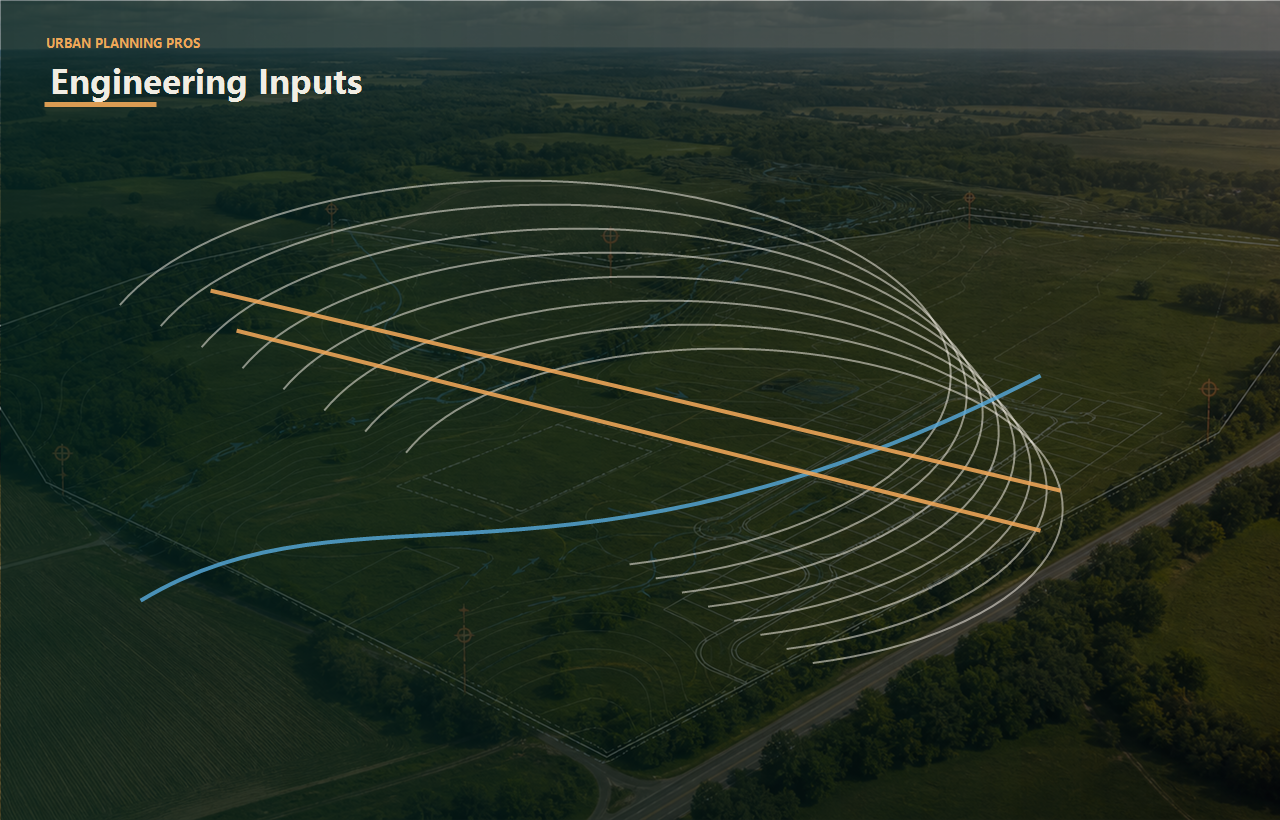
Skipping Phase 1 and Phase 2 Engineering? Here’s Why That Could Be a Six-Figure Mistake in Alabama header image for Urban Planning Pros showing Engineering coordination image with contour and drainage overlays
Engineering inputs Drainage, grading, utilities, access, and civil scope tied to the land decision.

You’ve got land in Alabama and a vision—maybe a residential subdivision, a commercial build, or a mixed-use project that could transform a corner of your county. But before any dirt gets moved, there’s one question that separates successful developers from future lawsuits:

Have you done your Phase 1 and Phase 2 engineering?

In land development, these two stages are not bureaucratic speed bumps—they’re the foundation that determines if your project will succeed before you commit your capital, time, or reputation. Skipping them doesn’t save money. It multiplies risk.

And in Alabama’s ever-evolving landscape of environmental scrutiny, drainage requirements, and permitting expectations, you can’t afford to guess.

What Is a Phase 1 Engineering Assessment?

Phase 1 is the investigative stage—the first deep look into what your land is really made of.

It includes:

At this stage, we’re not drawing buildings. We’re drawing borders between possible and impossible. Phase 1 reveals legal, regulatory, and physical limitations that could affect cost, timeline, or viability.

For example:

Let’s say you’re planning a small commercial site off Highway 280. Phase 1 identifies that 30% of your property sits within a FEMA-designated Special Flood Hazard Area (SFHA). Without this information, you might spend $10,000+ on architectural plans—only to find out you can’t build what you envisioned without mitigation, flood insurance, and drainage approvals that triple your infrastructure budget.

Why Phase 2 Engineering Isn’t Just a Technicality

If Phase 1 is about investigation, Phase 2 is about validation and precision.

This stage includes:

Skipping Phase 2 is like deciding to build a house without checking if the ground beneath it can handle the foundation.

It’s in this phase that we determine:

In Madison County, for instance, stormwater detention requirements have become increasingly strict due to runoff issues. If your Phase 2 doesn’t account for this in the civil design, you may find yourself redesigning from scratch—at your expense—after an agency rejection.

What Happens If You Skip These Phases?

The short answer? Nothing good.

Here’s what can go wrong:

In short, you might save $20,000 by skipping engineering—but lose $200,000 correcting preventable problems.

Our Vertically Integrated Approach: Built for Alabama’s Realities

At UrbanPlanningPros, we approach land development differently.

Because we’re vertically integrated, we handle both strategic consulting and technical engineering—bringing everything under one roof and one plan. That means you don’t get a Phase 1 team that forgets about Phase 2. You get a project roadmap with continuity, accountability, and local expertise.

We coordinate with:

More importantly, we don’t just identify problems, we provide solutions that align with what’s physically and legally possible for your land in today’s Alabama regulations, not last decade’s assumptions.

Don’t Break Ground Blind

Too many Alabama landowners learn the hard way that cutting corners on early engineering doesn’t speed things up, it shuts them down. And by the time you’re in damage control mode, the costs have already ballooned.

Phase 1 and Phase 2 are not technicalities. They are your foundation.

If you’re even thinking about developing your land, let us help you find the facts first—so you’re not paying for mistakes later.


Get a Professional Land Engineering Review Today
Schedule a consultation with UrbanPlanningPros

Because your land might look ready—but the ground tells a deeper story.

Expanded planning guide for Skipping Phase 1 and Phase 2 Engineering? Here’s Why That Could Be a Six-Figure Mistake in Alabama

Housing and tiny-home content should help readers separate market excitement from development reality. Smaller structures do not automatically create simpler approvals, and creative housing models still need zoning fit, infrastructure, access, fire review, utilities, wastewater, density logic, financing, and community credibility.

Why this issue matters before design momentum builds

Housing concepts often become expensive when the team falls in love with unit count, renderings, or a lifestyle story before testing whether the jurisdiction and site can support the model. Early planning keeps the concept flexible enough to adjust before public or investor expectations harden.

For landowners, developers, builders, and investors, the important question is not whether the idea sounds attractive. The practical question is whether the idea can survive the zoning path, the physical site, the required technical studies, the available budget, the review calendar, and the owner's exit strategy. When those pieces are not discussed together, the project can look strong in conversation while quietly accumulating risk.

Common bottlenecks behind this housing question

The bottlenecks usually include density rules, minimum lot or unit standards, wastewater capacity, fire access, parking, utility extensions, local perception, and uncertainty around whether the use is treated as residential, hospitality, RV, manufactured housing, or something else.

Most stalled land decisions are not stalled because one person failed to work hard enough. They stall because the wrong question was answered first, the next technical scope was not tied to a decision, or the owner received fragments of information without a clear interpretation. A survey note, zoning email, utility comment, drainage observation, or staff concern only becomes useful when someone translates what it changes for the project path.

How each stakeholder should read the risk

Landowners should look at this topic through value, timing, and optionality. If the issue affects use, density, access, title, drainage, environmental review, or approval sequence, it can change whether the land should be held, sold, partnered, entitled, built, or walked away from. Developers should read the same issue through entitlement risk, infrastructure cost, phasing, capital exposure, and investor confidence. Builders should ask whether the information changes site readiness, field sequencing, permit timing, or construction assumptions.

Lenders, investors, brokers, attorneys, engineers, surveyors, and municipal reviewers all need a different level of detail, but they benefit from the same discipline: name the bottleneck, identify the missing proof, and decide what should happen next. That is why a feasibility-first article should not end with general advice. It should help the reader decide which question deserves attention before more money or credibility gets spent.

Documents to gather before the next feasibility conversation

Before the next conversation, gather the documents that show what is known and what is still assumed. The goal is not to bury the project in paperwork. The goal is to give the first review enough context to identify the most important unknowns quickly.

  • Property address, parcel number, or legal description
  • Current ownership or contract status
  • Target use, deadline, and intended exit strategy
  • Unit concept, density assumptions, wastewater or septic information, fire access notes, and utility availability
  • Community or neighbor concerns, financing model, and phasing expectations

How UPP would turn this into a next step

UPP would test the concept against land-use rules and site constraints, then shape a planning narrative that explains compatibility, infrastructure needs, phasing, and community benefit.

The best next step is usually not a generic full-service proposal. It is a scoped review that answers the question creating the most uncertainty right now. Sometimes that means a feasibility study. Sometimes it means master land planning, a survey scope review, engineering coordination, wetland or flood context, community-focused planning, or owner representation to bring the team back into alignment. The work should match the decision.

When to pause, re-scope, or ask for a second read

A strong owner does not pause a project because they are afraid of progress. They pause when the next dollar is about to answer the wrong question. If a buyer is still unsure about allowed use, if the team has not confirmed access or utilities, if drainage or flood information is vague, if the local review path is still being guessed, or if the owner cannot explain the exit strategy in plain language, the project is not ready for blind momentum.

That pause does not have to be dramatic. It can be a short feasibility review, a focused consultant scope, a staff conversation, a survey clarification, a planning concept revision, or a project-coordination meeting that turns scattered comments into a real sequence. The discipline is to separate urgency from importance. Urgency says to keep moving because people are waiting. Importance asks whether the next move protects the land decision, the owner's money, and the credibility of the project story.

Practical decision checklist

  • What decision does the owner need to make after reading this information?
  • Which jurisdiction, reviewer, consultant, or document can confirm the highest-risk assumption?
  • What could change the project cost, schedule, layout, entitlement path, or exit strategy?
  • What technical work is needed now, and what can wait until the first question is answered?
  • Who needs the plain-English summary before the team spends more money?

When these questions are answered in the right order, the project does not become risk-free, but it becomes easier to manage. The owner can stop treating uncertainty as background noise and start treating it as a sequence of decisions. That is the core value of Urban Planning Pros' education center: help the reader slow down just enough to avoid the wrong expensive move, then move forward with a clearer plan.

For practical use, save this article with the parcel notes, share it with the project team, and mark the one question that could change the next commitment. That single question should drive the first scope, call, or document request.

If the answer is not obvious, that is exactly the point of slowing the project down for a focused review. A short planning pause can protect a closing, a design budget, a contractor relationship, an investor meeting, or a public hearing. It gives the owner a cleaner story and gives the team a better reason for the next action.

Before you buy, build, grade, or pitch the deal, know what the land will actually allow.

Send the property information and the outcome you are aiming for. UPP will help define the right first review.

Book a Feasibility Call